Python remains one of the most widely used programming languages in finance, healthcare, logistics, and public sector technology. Its readable syntax makes it a practical entry point for anyone starting programming, which is part of why so many people search for Python classes in Singapore before writing their first line of code. This guide sets out how to learn Python from scratch as a complete beginner, what to learn first, and how long each stage generally takes. Readers new to the language may also find this guide to Python’s practical uses useful before mapping out a learning path.
Why Python Is a Good First Programming Language
Python’s syntax reads close to plain English, so it is commonly recommended over languages such as Java or C++ for a first attempt at coding. A beginner can write a working program in a handful of lines that would take considerably more code in most other languages. Its large community means solutions to common errors are usually easy to find. Because Python spans web development, data work, and scientific computing, skills picked up early stay useful whichever direction a learner eventually takes.
The Stages of Learning Python
Learning Python moves through four distinct stages, and skipping ahead tends to create gaps that surface later.
- Beginner stage: Syntax, variables, and basic logic.
- Intermediate stage: Data structures, functions, and file handling applied to small problems.
- Advanced stage: Libraries, larger programs, and code structured for real projects rather than exercises.
- Specialisation stage: A focused direction such as data analytics, automation, or web development, backed by relevant project work.
Learners who move from the beginner stage straight into libraries and frameworks often struggle, since most frameworks assume fluency in concepts they skipped over. Knowing what to learn first in Python at each stage is what prevents this gap before it happens.
What to Learn First in Python
The order matters more than most beginners assume. Python syntax comes first, followed by variables and data types, the basic building blocks of any program. Operators and conditional statements introduce decision-making, loops teach repetition, and functions teach how to organise code into reusable blocks instead of one long script.
From there, lists, dictionaries, tuples, and sets teach how to store and manage information, which is where most real programs actually live. File handling introduces reading from and writing to external files, and exception handling teaches how to catch errors gracefully instead of letting a program crash mid-run. Loops are difficult to grasp without first understanding conditionals, and dictionaries make more sense once lists are familiar, so this sequence is not arbitrary.
Essential Programming Concepts Beyond Syntax
Syntax alone does not make someone a capable programmer, and this is where many self-taught learners fall behind without realising it.
- Problem solving: breaking a task into smaller steps before writing any code
- Logic building: the actual structure behind a working solution
- Debugging: systematically finding why code fails instead of guessing
- Code readability: clear naming and consistent formatting
- Basic version control using Git to track changes
- Working with external libraries rather than rebuilding everything from scratch
- Virtual environments, to keep project dependencies from colliding
These habits separate someone who can follow a tutorial from someone who can build independently once the tutorial ends.
When to Start Building Projects
Waiting too long to build is one of the more common reasons learners understand individual topics but struggle to connect them. Projects force combination rather than isolation.
Beginner-friendly builds include a simple calculator or an expense tracker that logs daily spending to a file. Intermediate projects might be a student record system or a weather app pulling live data from a public API. More advanced learners often build a CSV data analyser that cleans and summarises spreadsheet data or a web scraper, which combines file handling, libraries, and problem-solving in one project. Two or three well-documented builds are usually enough for a first portfolio.
Choosing a Python Specialisation
Once the fundamentals are solid, direction typically depends on personal interest and where current demand sits.
Career Path | What You’ll Learn | Common Python Libraries |
Data Analytics | Data cleaning and analysis | Pandas, NumPy |
AI and Machine Learning | Predictive models | Scikit-learn, TensorFlow |
Web Development | APIs and backend logic | Flask, Django |
Automation | Task automation | Selenium |
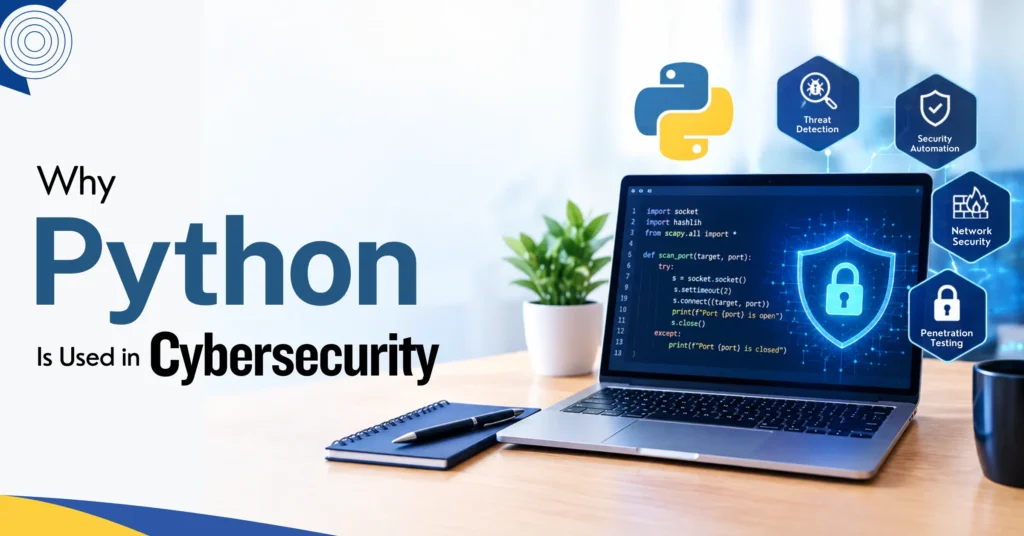
Cybersecurity | Scripting and analysis | Scapy |
Data Engineering | Data pipelines | PySpark |
Each path shares the same Python foundation, so nothing learned earlier goes to waste. This layered approach is sometimes called a Python career roadmap, though in practice it is less linear and more about building skills as interest develops.
Common Challenges Beginners Face
A few patterns show up repeatedly. Memorising syntax instead of understanding logic makes it hard to adapt to new problems. Skipping exercises in favour of passively watching tutorials feels like progress but rarely is. Copy-pasting code without understanding it, avoiding independent debugging, and jumping into too many libraries before the basics are solid all slow learners down. Inconsistent practice, short bursts followed by long gaps, tends to hurt retention more than most people expect.
How Long Does It Take to Learn Python?
Learning Goal | Estimated Time |
Learn the basics | 4–8 weeks |
Build beginner projects | 2–3 months |
Become comfortable with programming | 4–6 months |
Job-ready for entry-level roles | 6–12 months |
These timeframes depend more on consistency than total hours logged. Someone coding for thirty minutes daily will usually outpace someone who studies for four hours once a week.
Learning Resources Worth Using
Official Python documentation remains the most reliable reference for language features. Practice platforms reinforce concepts through repetition, GitHub exposes learners to real code written by others, and coding challenge sites build problem-solving speed. YouTube tutorials help when text explanations fall short, books suit learners who prefer structured depth, and community forums are useful when a specific error has no obvious answer.
How Beginners Usually Approach Learning Python
Learners generally take one of a few routes depending on their schedule and goals. Self-learning through free tutorials is a common first step, especially for people testing their interest before committing their time. Others prefer instructor-led learning, where direct feedback can clarify concepts faster than self-study alone, particularly for anyone who has tried learning Python before but stalled.
Working professionals often lean on weekend classes or part-time schedules that do not clash with a full-time job. Those wanting a faster, more immersive pace sometimes choose bootcamps, while practical workshops suit people who want a short, focused session on one specific skill. A search for a Python course in Singapore usually comes from someone who has already decided on instructor-led learning and is now narrowing down the format and schedule.
Is Python Alone Enough to Get a Job?
Python by itself rarely gets someone hired. Most roles involving data also expect SQL, since business data typically lives in relational databases rather than flat files. Git is standard in any team setting, familiarity with APIs matters for integration-heavy roles, and a small portfolio demonstrates applied ability that theory alone does not. Communication and problem-solving round out the picture, since technical skill without the ability to explain a decision does not always translate into workplace effectiveness. What skills does a data analyst need beyond Python? ‘ is a question worth asking early, since Python is usually just one part of the expected toolkit. For those specifically interested in analytics, this comparison of Python and SQL breaks down which of the two typically comes first and why.
Conclusion
Learning Python well tends to follow a consistent pattern: fundamentals first, then supporting skills such as debugging and version control, then projects that connect the two. Consistency beats occasional long sessions, and pairing Python with SQL and Git matters more than most beginners expect. Whether the goal is to learn Python from scratch or to strengthen an existing base through Python training or Python courses, the underlying sequence stays largely the same regardless of format chosen.