The Python programming language currently sits at the top of the TIOBE Index and GitHub’s most used language rankings, and it has held that spot for several years running. That’s not an accident.
While languages like Java and C++ once dominated general-purpose development, more teams are shifting away from them for daily projects. The reason is simple: the Python programming language works as the Swiss Army knife of programming, one language flexible enough to build a website, train an AI model, and automate a business task, all without switching tools.
By the end of this blog, you’ll know exactly why the Python programming language is so popular, its use across 12 real industries, and whether it’s still worth learning Python today. If you’re planning to build these skills yourself, a structured Python programming course in Singapore can shorten that learning curve considerably.
Why the Python Programming Language Is So Popular in 2026
Python’s history explains a lot about its current position. In its early years after release in 1991, Python was a niche scripting language, useful but far from mainstream. Over the next two decades, adoption grew steadily as web development, automation, and later data science pulled more developers toward it. Today, Python sits as the default choice for AI, data science, and backend development across nearly every major tech company. Looking ahead, demand for the Python programming language is expected to keep climbing as AI tools, automation, and simplified coding platforms increasingly rely on Python underneath the surface.
Python’s rise comes down to five things.
Simple syntax. Python code reads close to plain English, with no semicolons and no curly braces. A Hello World program is one line. In Java, it takes several. This is one of the strongest features of the Python programming language, since it lets new programmers focus on logic instead of fighting syntax rules.
A huge library ecosystem. PyPI hosts hundreds of thousands of ready made packages. Instead of building something from scratch, developers import a library and get working code in minutes.
Works everywhere. Python runs on Windows, macOS, and Linux without code changes, removing a common source of engineering problems for teams building software across platforms.
A large community. Google, Meta, and Microsoft all back Python, alongside millions of open source contributors. Bugs get fixed fast, and most problems already have a public answer somewhere online.
Connects to everything. Python links easily with other languages and tools. It can call C code for speed, talk to databases, and run cloud infrastructure, all from one script.
If you’re comparing Python vs other programming languages, one more point matters: Python is interpreted, not compiled, which makes testing and making changes faster than statically compiled languages like Java or C++.
12 Practical Uses of the Python Programming Language You Should Know
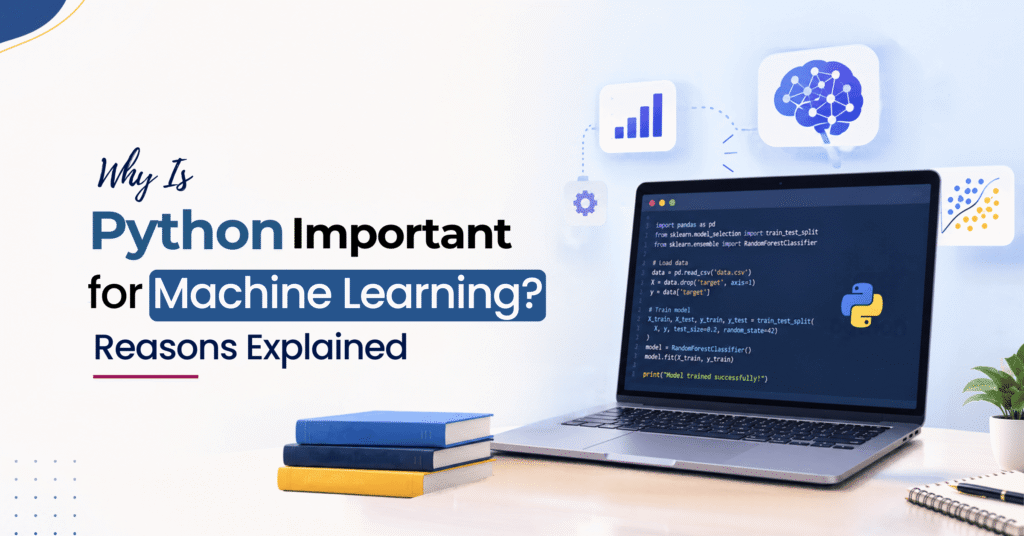
Artificial intelligence and machine learning applications Python is the top choice for building AI systems, from basic machine learning models to modern generative AI tools. TensorFlow, PyTorch, Scikit learn, and Hugging Face already contain the core building blocks for neural networks, so teams don’t need to write that math from scratch. Nearly every AI research paper published today ships with Python code alongside it. For learners, this makes Python the natural starting point before specializing further, and a dedicated Machine Learning with Python course covers exactly this path from fundamentals to applied models.
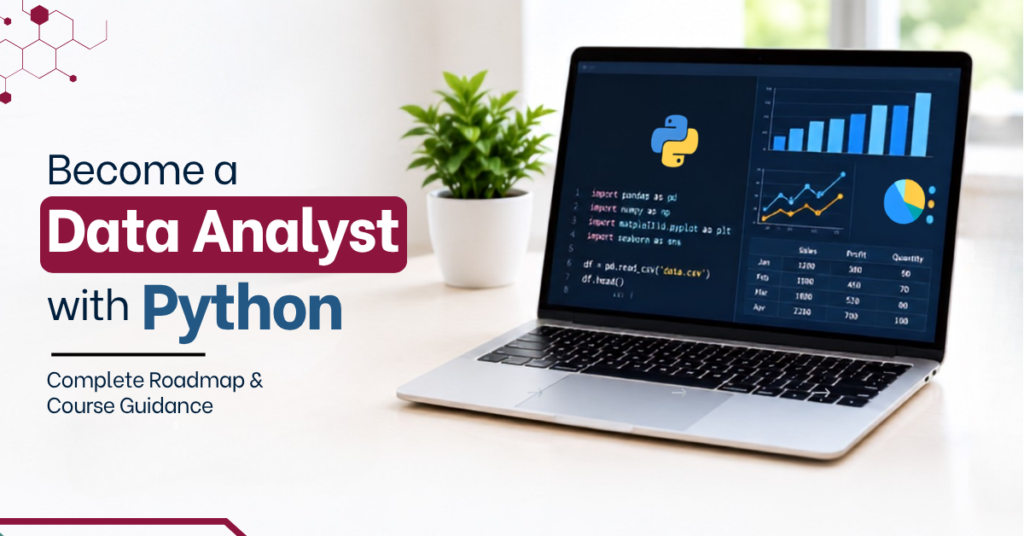
Data science and big data analysis Companies collect huge amounts of raw data, and someone has to clean it, structure it, and pull insight out of it. Pandas and NumPy are the standard data science tools here, used to filter, merge, and reshape datasets before they go into a report or a model. Analysts who know Python typically move from raw data to finished insight far faster than those relying on spreadsheet tools alone, which is one reason a Python for Data Science course in Singapore is often the first upskilling step professionals take.
Python for backend web development Python runs the backend of platforms like Instagram, Spotify, and Pinterest. Django and Flask, along with FastAPI, let developers build the server-side logic, including user accounts, databases, and APIs, without writing repetitive code every time. FastAPI has grown fast because it handles thousands of requests per second with less code than older frameworks. Developers looking to move into this area usually start with a Python web development course in Singapore to understand how these frameworks fit together in a real project.
Automation and scripting for everyday tasks This is Python’s most common everyday use. Renaming hundreds of files, generating invoices, scheduling emails, or pulling reports every morning—all of it can be scripted using Python automation with the built-in os module. Businesses use this to cut hours of manual, repetitive work down to seconds, and even less technical staff can pick up basic scripting quickly once they understand the core logic.
Data visualization and dashboards: Numbers alone rarely convince anyone. Matplotlib, Seaborn, and Plotly turn spreadsheets into charts, graphs, and dashboards that a manager or client can actually read and act on. Plotly specifically powers interactive dashboards where users filter and zoom into data themselves, which makes it a common choice for internal reporting tools across finance and operations teams.
Financial analysis and algorithmic trading: In finance, speed matters. Python builds trading models, runs risk calculations, and tests stock market predictions before real money is involved. QuantLib and Zipline are commonly used to backtest a trading strategy against years of historical price data before it goes live, letting analysts spot flaws in a strategy without risking capital.
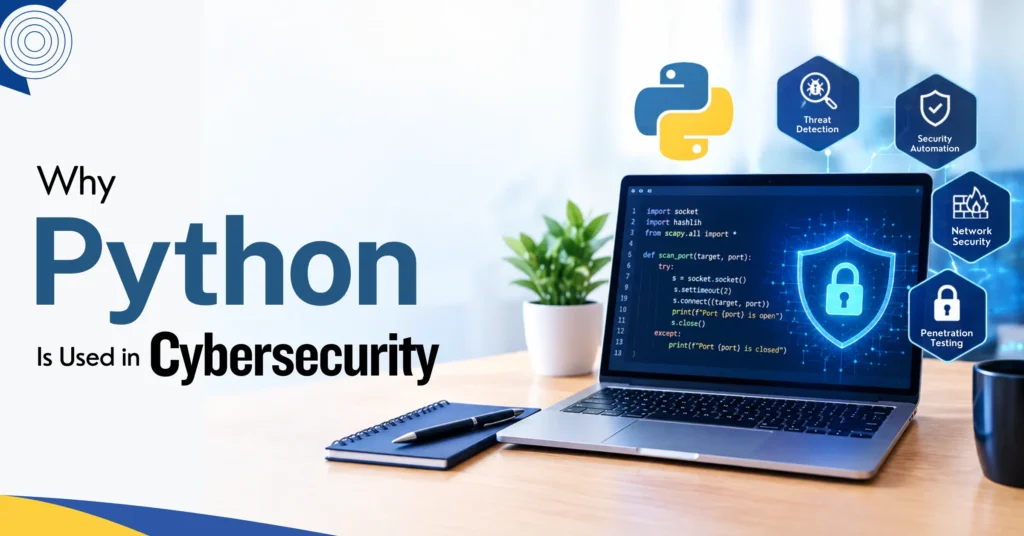
Cybersecurity and ethical hacking tools Security teams write penetration testing scripts, scan networks for weak points, and build malware analysis tools using Python. Scapy handles packet-level network analysis, while the cryptography library covers encryption tasks. Because Python scripts can be written and modified quickly, security teams often prototype a test case in Python before building a permanent tool around it.
Cloud computing and DevOps automation Deploying code to AWS, Azure, or GCP without manually logging into a server each time is a job that relies heavily on Python. Ansible and SaltStack automate server configuration, while AWS Boto3 lets developers control cloud resources directly from a script. This shift toward scripted deployment is a large part of why DevOps teams treat Python as a core skill rather than an optional one.
Web scraping for research and pricing Pulling data from websites, such as competitor prices, product listings, or public records, for research or comparison is done with BeautifulSoup, Scrapy, and Selenium. Retail companies use this constantly to track competitor pricing in near real time, feeding the results directly into pricing algorithms without manual checking.
Software testing and quality assurance Before an app goes live, it needs testing. Selenium automates browser-based testing, while PyTest runs unit tests to catch bugs before users do. QA teams often run thousands of these tests automatically overnight, which means issues are flagged before a single human tester opens the app the next morning.
Python for IoT and embedded systems: Python isn’t limited to software. MicroPython and Raspberry Pi let developers program smart home devices, robotics, and small hardware controllers using the same language they’d use for a website or AI model. This overlap means a developer’s existing Python skills carry over directly into hardware projects.
Scientific computing and academic research In physics, biology, chemistry, and math, researchers use SciPy and SymPy to run calculations and simulations and solve equations that would take much longer by hand or in older tools like MATLAB. Many university departments now teach Python alongside or instead of legacy tools for this reason.
Top 5 Industries Dominated by the Python Programming Language
Python’s footprint across industries has followed a clear arc. In the past, its use outside tech and research was limited. In the present, it sits at the core of AI, finance, entertainment, retail, and healthcare systems worldwide. Going forward, industry demand for Python skills is expected to grow further as more sectors automate decision making and build products powered by AI.
AI, generative AI and machine learning technology This industry runs on Python’s frameworks and computational tools, including Hugging Face, OpenAI APIs, PyTorch, and FastAPI. It’s the primary choice for training generative AI models and automating workflows. Top companies include Google, OpenAI, Meta, and Microsoft.
Fintech and global banking Finance needs analysis of millions of transaction points as they happen, fraud detection, and algorithmic trading. Python’s data tools handle this well. Top companies include JPMorgan Chase, Goldman Sachs, Stripe, and PayPal.
Entertainment and streaming media Every personalized recommendation you get on Netflix, Spotify, or YouTube comes from a Python algorithm analyzing your viewing or listening patterns in the background. Top companies include Netflix, Spotify, and YouTube.
Ecommerce and logistics Automatic price adjustments, automated inventory management, tracking buyer behavior, and AI customer support chatbots all run on Python. Top companies include Amazon, Walmart, and Shopify.
Healthcare and pharmaceuticals Testing new medicines and vaccines involves analyzing large clinical trial datasets, DNA sequencing, and medical image processing, spotting early signs of disease in X rays and MRI scans through Python’s predictive models. Top companies include Pfizer, CVS Health, and Roche.
Conclusion: Is the Python Programming Language Still Worth Learning?
Python’s popularity isn’t hype. In the past, it earned its place through simple syntax and a growing library ecosystem. In the present, it holds the top spot across the highest paying industries in tech. Looking forward, that position is likely to strengthen further as AI, automation, and data-driven decision-making expand into more industries each year.
Whether you’re weighing Python career scope against other paths or deciding which language to build your next project in, the Python programming language remains one of the most practical choices available right now.
If you’re ready to start, focus on the basics first, including syntax, data structures, and simple scripts, before moving into a specialized track like AI, data science, or web development through a structured Python programming course in Singapore.