Data Analytics Course with Python
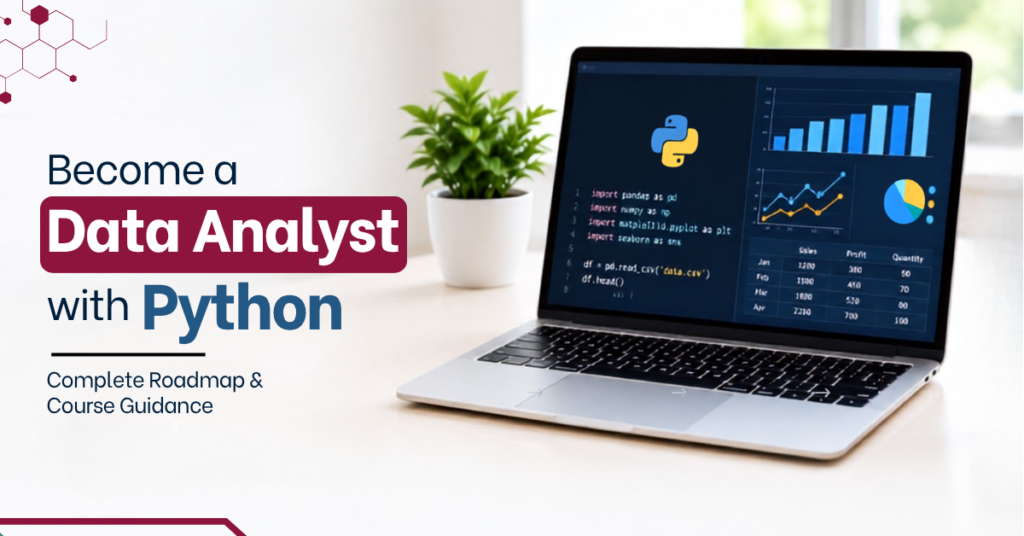
Data Analytics Course with Python in Singapore enables you to extract useful insights from data and use them to support decisions for the future. Python is widely used by data science professionals, and this course covers various libraries and frameworks that Python has to offer. Along with learning the concepts, you also get to work on real-world projects and apply Python to practical data analytics tasks.
About Data Analytics with Python Course
- Prerequisites – Python Basics and familiarity with Python Intermediate. If you are new to Python, we strongly recommend you to take a look at our course offerings for Python For Beginners and Intermediate Python.
- You get to learn with the best trainers in the country.
- Exposure to how a Data Science Professional goes about doing things on a project.
- Hands-on practice and doubt clearing during the class hours.
- Both Online and Classroom modes offered.
- We focus on practical training that stays with you long after the course ends.
Python fundamentals include variables, data types, loops and functions. These concepts form the basis of more advanced Python applications. The basic Python course for beginners covers these foundational programming concepts.
Benefits of taking the Python Data Analytics Course
- The Data Analytics course will cover all the concepts to get you started.
- Hands-on practice during the class.
- The curriculum is designed by industry experts with years of experience.
- Future proof your career with the programming language of tomorrow.
- Be a part of the data-savvy world by transitioning to the hottest job profile of the 21st century.
- One of the best paying job profiles of the 21st century.
Python Data Analysis Course Key Takeaways
- After finishing the Data Analytics Course, you will be able to extract the insights that data has to offer.
- Study material curated by Industry experts.
- Certification on successful completion of course.
Data Analytics Course Outline
Module 1
The target of this module is to comprehend how to gather data from external sources into the Python environment and manipulate and analyse data. You should utilise statistical algorithms and ways to analyse data before creating any data analytics project.- Understand Python packages for data manipulation
- Understand how to import and export datasets
- Understand the fundamentals of analyzing the data
Module 2
The target of this module is to know about Data Wrangling. Python libraries can allow you to work with data inconsistencies and problems. About 80% of data scientists and engineers invest their time in this.- Comprehend how to deal with data issues and preparation
- Understand how to format data and conversions in Python
- Understand how to work with Pandas
Module 3
The target of this module is to comprehend experimental data analysis. EDA is a way to analyse data through visual methods.- Understand how to perform detailed statistics with Python
- Understand Correlations, Scatter-plots, and charts with Matplotlib
- Understand data analysis with respect to different business scenarios
Module 4
The target of this module is to comprehend Supervised Machine Learning. This module will instruct you on famous algorithms in regression and classification and provide students with knowledge of how the algorithms work.- Create Series and DataFrames
- Load and Save pandas Data
- Analyze Data in DataFrames
- Slice and Filter Data in DataFrames
Module 5
The target of this module is to know Data Visualisation, metrics, and KPIs of different business cases for data analysis.- Understand basic metrics and KPIs
- Understand Visualizations using Python (Seaborn, Folium)
Frequently Asked Questions
What topics are covered in a Data Analytics course with Python in Singapore?
The course covers data manipulation, data cleaning, Pandas, exploratory data analysis, statistical analysis, Matplotlib, data visualisation, and business metrics and KPIs.
Do I need Python programming knowledge before joining a data analytics course?
Yes, basic and intermediate Python knowledge is recommended. Beginners should learn Python fundamentals before enrolling in the Data Analytics course.
Which Python libraries are used for data analytics?
The course covers Pandas for data manipulation, Matplotlib for data visualisation, and Seaborn and Folium for visualisation. These libraries help analyse datasets and present findings.
Can I learn data cleaning and data visualisation using Python?
Yes, the course covers data cleaning, data formatting, exploratory data analysis, statistical calculations, correlations, scatter plots, and charts to help learners interpret datasets.
Will I work on real-world data analytics projects during the course?
Yes, the course includes hands-on practice and exposure to data science project workflows, helping learners apply Python concepts to data analysis tasks.
What can I learn from a Python data analytics course?
You can learn to import datasets, clean and manipulate data, perform exploratory analysis, calculate statistics, create visualisations, and interpret business metrics and KPIs.
Will I receive a certificate after completing the Data Analytics course with Python?
Yes, Python Class Singapore states that learners receive a certificate upon successful completion of the Data Analytics course.