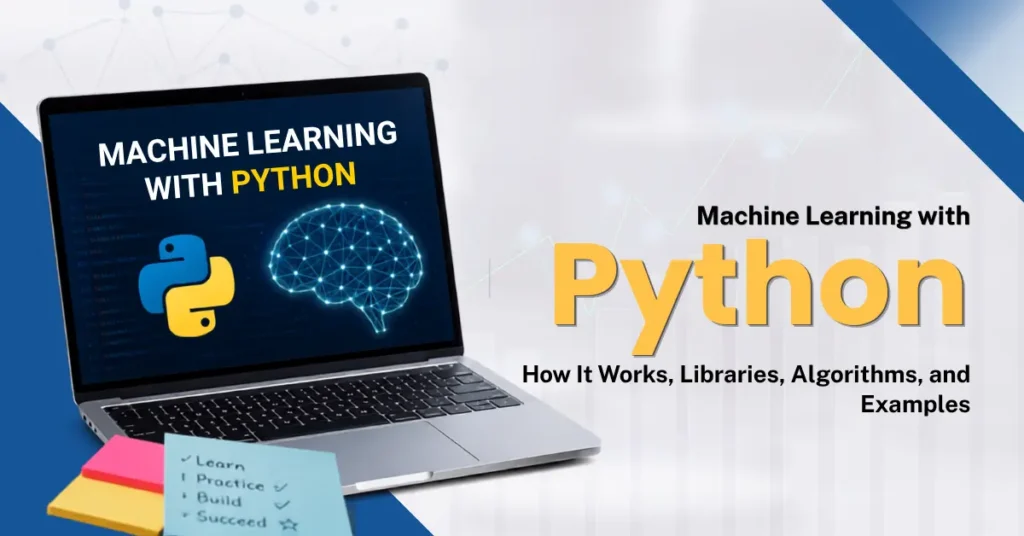
Machine Learning with Python Course
Machine learning is a kind of data analysis that automates the creation of analytical models. In machine learning, statistical techniques are implemented to create systems that can identify patterns and make decisions by learning from available data. Our Machine Learning with Python Course in Singapore focuses on implementing these techniques using Python to develop practical machine learning systems.
Machine learning also focuses on continuous improvement in the performance of a system by providing it with varied data samples.
In simple terms, machine learning is the science of teaching systems to react and make predictions based on the data that has been provided to them.
Machine learning is widely used in areas like
- Prediction
- Medical Diagnosis
- Image Processing
- Classification
- Speech Recognition
- Banking & Financial Services
- Self-driving cars
- Smart homes
- Social Media
Our Machine learning with Python Course
- Python Programming
- Python Libraries and Frameworks
- Machine Learning
- Making Accurate Machine Learning Models
- How to Choose a Machine Learning Model for a Specific Problem
About the Machine learning with Python Course
- No coding experience required, this course covers Python Programming for Beginners.
- You get to learn with the best trainers in Singapore.
- Exposure to how an expert goes about doing things on a project.
- Hands-on practice and doubt clearing during the class hours.
- Both Online and Classroom modes offered.
- We focus on practical training that stays with you long after the course ends.
Benefits of taking the Machine learning Course
- Python Concepts
- Python Libraries like Pandas, NumPy, Matplotlib
- Object Oriented Programming Concepts
- Machine Learning Concepts
- Statistical Concepts
- Linear Regression
- Logistic Regression
- Decision Tree
- Support Vector Machine
- K-Means
- Random Forest
- Neural Network
Key Takeaways of Machine Learning with Python course
- After finishing the course successfully, you will be able to apply Machine Learning concepts and choose the right Machine Learning models for a problem.
- Study material curated by Industry experts.
- Machine Learning course certification on successful completion of the course.
Machine Learning using Python Course Outline
Module 1
The target of this module is to teach the fundamentals of Data Preparation and learn the importance of machine learning in terms of functional & non-functional processes.- Restoring the crucial techniques in Python is essential to machine learning.
Module 2
The target of this module is to comprehend the basics of machine learning with Sckikit-learn. Also, you can understand the significant libraries of machine learning in this module.- Learn numerous supervised learning algorithms.
- Learn feature engineering and feature sets.
- Execute numerous Supervised ML algorithms with real use cases.
Module 3
The target of this module is to comprehend Unsupervised Machine Learning. It utilises the famous python library known as scikit-learn. Unsupervised learning is essential in different business cases today, right from client division to property examination.- Know unsupervised ML algorithms.
- Know clustering (k-means, SOM).
- Implement clustering with real use cases.
Module 4
The target of this module is to comprehend Supervised Machine Learning. This module will instruct you on famous algorithms in regression and classification and provide students with knowledge of how the algorithms work.- Create Series and DataFrames
- Load and Save pandas Data
- Analyze Data in DataFrames
- Slice and Filter Data in DataFrames
Module 5
The target of this module is to comprehend machine learning models and the data science lifecycle. Also, you will understand model selection, evaluation, and optimisation.- Understand model selection and evaluation methods.
- Understand how to optimize machine learning models.
Mode of Assessment
2. Written Assessment (Case Study)
3. Oral Questioning